


Occupational Hazards and Protection of Medical Staff in Endoscopy Center for Occupational Protection
Release time:
2020-04-10
Endoscopy, as an important means of examination of digestive system diseases, is more and more widely used in clinical practice. The nurses in the endoscopy center need to contact all kinds of body fluids and secretions of patients on a daily basis, and are easily infected by pathogenic microorganisms. Therefore, in order to the medical staff's occupational safety and physical and mental health, should strengthen the endoscopy room medical staff's personal protection consciousness, strengthenModel management, identify risk factors and develop preventive measures.
Occupational Hazards
1.1 biological factors
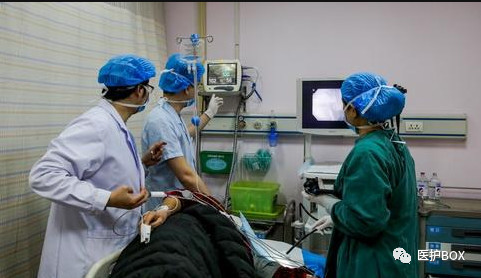
During colonoscopy or gastroscopy, medical staff will frequently contact various body fluids of patients, including body fluids of patients with positive blood such as hepatitis B, hepatitis C, and syphilis. If the abdominal pressure is too high during colonoscopy, excrement and blood will be sprayed out with the lens body, causing pollution to the operator. During gastroscopy, the secretions, gastric juice, and sputum in the patient's oral cavity will be sprayed to the head and face of the medical staff. These infectious agents are transmitted through direct contact with the skin or airborne droplets and pose a health threat to medical personnel in the endoscopy room. A seroepidemiological survey of 163 endoscopy staff found that the rate of hepatitis B infection was 63.62 per cent, and the infection rate increased with the length of service.
1.2 physical factors
Physical factors such as sharp instrument injury during endoscopic examination, noise during disinfection after examination, and indoor ultraviolet disinfection can cause a certain degree of harm to medical staff. It is reported that needle stick injuries account for 80% of the infection routes caused by occupation. Only 0.004ml of blood with hepatitis B virus is enough to infect the injured person. When disinfection is carried out after endoscopic examination, the noise emitted by the ultrasonic cleaning machine, decontamination machine, air gun and other machines will make the medical staff with heavy workload feel irritable, fatigue, headache, dizziness, hearing loss and other symptoms. The disinfection application of ultraviolet lamp is very convenient, but it will cause damage to the eyes and skin of medical staff under long-term irradiation, and the ozone generated during the irradiation process will also cause harm to the human body.
1.3 chemical factors
At present, one of the most widely used disinfectants for endoscopic disinfection is glutaraldehyde disinfectant, which has no damage to the endoscope, but is volatile, irritating and toxic to the skin, mucosa and respiratory tract. The long-term stimulation of glutaraldehyde disinfectant will cause the medical staff responsible for the decontamination room to produce symptoms such as allergic rhinitis, hand rash, eye irritation and tears. Poor ventilation in the working environment, the disinfection process is not closed, the failure to deal with the waste glutaraldehyde disinfectant in time as required, and long-term exposure to formaldehyde, 84 disinfectant, multi-enzyme cleaning solution, etc., aggravate the damage to the health of medical staff.
1.4 psychological factors
The disinfection and isolation work of endoscopy room is strict, and nurses have great responsibilities in their work. They must always pay attention and be careful. When patients come for endoscopy, they are mostly examined on an empty stomach, and the queue time is relatively long. The nurses at the consultation desk explain more work and calm the patients' emotions. Therefore, nurses are in a state of overload and tension for a long time, which can easily lead to anxiety and neurasthenia. In addition, in the long-term face of emergencies, medical troubles and other risks, these have increased the psychological burden of medical staff, and it is easy to produce physiological and psychological fatigue.
Protective measures
2.1 strengthen the management system
It is necessary to establish a sound nursing system and operating procedures, strengthen the study of the control of hospital infection system and the education of iatrogenic disease knowledge, and strictly implement the "Technical Specifications for Endoscopic Cleaning and Disinfection" issued by the National Health Commission. The work of the room has been clearly stipulated, and all hospitals should strengthen the management of the endoscope room to prevent cross-infection and reduce occupational hazards. Focus on learning "Technical Specifications for Endoscopic Cleaning and Disinfection", "Knowledge of Occupational Exposure Protection for Medical Staff", etc., so that general medical staff can understand and master the knowledge of hospital infection as soon as possible. Organize the responsible personnel of the hospital, formulate the system of cleaning endoscopes by professionals and make management and registration to ensure the implementation of various systems.
2.2 Enhance the Protection Consciousness of Medical Staff
It is necessary to strengthen protection education and improve the protection awareness of nursing staff. In the past education, only emphasis on the dedication of nursing staff and not afraid of hardship, not afraid of dirty education, rarely self-protection education, and this is the main reason for the lack of self-protection awareness of nursing staff. Therefore, in the face of many patients, large mobility and complex condition in the endoscopy room, the nursing staff working in the endoscopy room should implement comprehensive preventive protective measures, strengthen the self-protection awareness of nursing staff, improve their own safety protection knowledge and protection ability through learning, and master the factors and preventive measures of occupational hazards.
2.3 strengthen the awareness of occupational safety protection
Strengthen the publicity and education of occupational safety and protection awareness of medical staff, and incorporate protection knowledge into the content of continuing education. The management should improve the working conditions of the endoscopy room, establish rules and regulations, employees should do a good job in standard prevention during operation, and be equipped with corresponding protective facilities. The room should pay attention to regular window opening and ventilation, and the installation of ventilation equipment and glutaraldehyde disinfectant should be covered in time.
2.4 prevention of infectious diseases
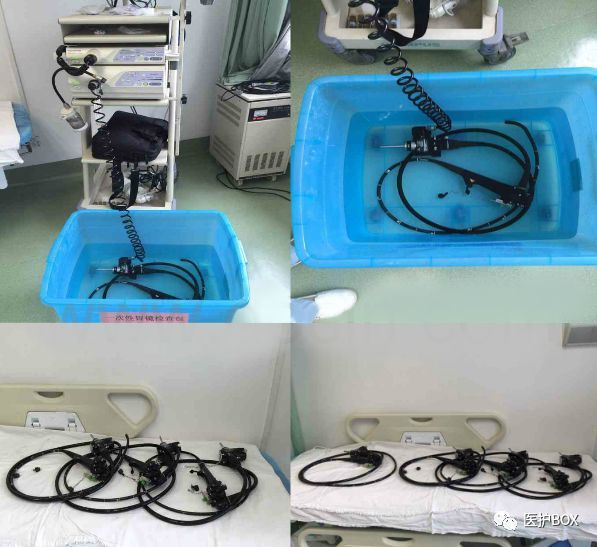
In recent years, reports of endoscopy-related pathogen transmission have continued to emerge, including hepatitis C virus (HCV), Pseudomonas aeruginosa, Mycobacterium tuberculosis, and Mycobacterium intracellulare. Before endoscopy, blood tests should be carried out to determine whether the patient has infectious diseases, such as hepatitis B, hepatitis C, AIDS and syphilis. Wear gloves, masks, hats, surgical gowns and goggles when necessary. Endoscopic cleaning is particularly important. It is necessary to standardize the disinfection process, strictly follow the process of enzyme washing-cleaning-disinfection, sterilization-washing and drying, and use a timer to control the time of disinfection and sterilization to ensure that the quality of disinfection is up to standard. Ensure the medical safety of patients in the process of diagnosis and treatment. Ensuring the disinfection and cleaning of endoscopes is a key step in cutting off the route of infection. If the cleaning is not complete, it will affect the disinfection and sterilization effect of the endoscope. After use, the mucus and other substances attached to the surface of the endoscope and the pipeline should be cleaned in time, and the pliers, air supply and water supply holes should be cleaned with a high-pressure water gun. After cleaning, the endoscope and other instruments will be brushed in multi-enzyme liquid to increase the disinfection and sterilization effect. In order to further avoid the emergence of iatrogenic infection, in the process of using endoscopy, it is necessary to strengthen the professional ethics awareness of medical staff and improve the sense of responsibility of relevant personnel.
Optimal Management of 2.5 Endoscope Disinfection
Master the performance, efficacy and preparation procedures of chemical disinfectants used routinely, and strictly master the effective concentration and dosage of chemical disinfectants. Nurses in the endoscopic room should wear masks, gloves and waterproof aprons in their daily work. If necessary, they should wear goggles or masks to prevent direct contact with disinfectant and avoid disinfectant splashing into eyes and inhaling respiratory tract. The container tank for disinfectant should be covered to prevent volatilization, which can not only ensure the effective concentration of disinfectant, but also reduce the harm to the body. The working environment should regularly open windows for ventilation. It is recommended to install exhaust fans to keep indoor air fresh and minimize the concentration of disinfectants in the air. The effect monitoring of endoscopic cleaning and disinfection is an important method to find out the problems in cleaning and disinfection, and it is also an important means to ensure the medical quality and patient safety. The disinfection effect of the disinfected endoscopes was monitored once every quarter, and the specimen was collected by the combination of inner cavity sampling and outer surface sampling, so as to correctly evaluate the quality of cleaning and disinfection of endoscopes.
2.6 to avoid sharp stab wounds
It is documented that a questionnaire survey was conducted on the sharp instrument injuries of 193 nurses in a general hospital from January 2004 to June 2005. Results 46.1% of nurses suffered sharp instrument injuries, 1.6 times per capita. Sharp instrument injuries were mainly caused by syringe needle (36.7%), followed by glass (32.4%). 79.1% of nurses did not wear gloves when they suffered sharp instrument injuries. Therefore, it is necessary to strengthen the attention and prevention education of the endoscopy room nurses to the harm of sharp instrument injury, improve the awareness of safety protection, and minimize the spread of blood-borne diseases. Be familiar with the use of sharp instruments, and put all kinds of needle tubes, needles, etc. in special containers in time after use. When injecting and drawing medicine, you should operate carefully in a place with sufficient light, use ampoule breaking device, and do not break ampoules with bare hands, so as to reduce glass scratches caused by breaking ampoules. If you are accidentally stabbed by a sharp instrument, you should squeeze the wound immediately, squeeze out blood as much as possible, rinse repeatedly with normal saline, disinfect the wound with 75% alcohol and complexed iodine, and report to the hospital's sense control department for registration. Fill in the occupational exposure report card of medical staff, carry out a series of background tests of infectious diseases and corresponding vaccination, and report to the nursing department and the hospital.
2.7 do a good job of terminal disinfection
After the end of every day's work, endoscopes need terminal disinfection. Generally, normal patients are disinfected for 30min and infected patients are disinfected for 45min. All parts of the disinfector and suction device are thoroughly cleaned and disinfected for standby. The working surface, table, chair, cabinet and floor of the consultation room are wiped with chlorine-containing disinfectant. The used rag and mop are disinfected and dried for standby.
2.8 physiology and self-protection
The establishment of personal health records, a health examination once a year, the staff of high-risk departments should be vaccinated on time, in order to improve the ability of medical staff antiviral. Nursing staff must have good living habits to avoid hypoglycemia caused by skipping breakfast. Adequate human resources can ensure the orderly and stable work of nurses, reduce the bending action when standing for a long time and cleaning for a long time, and reduce the occurrence of complications. Reasonable flexible shift arrangement ensures that nurses have sufficient energy to avoid digestive and nervous system diseases caused by overtime work. To learn doctor-patient communication skills, nursing staff should use more language that patients can understand to explain the patient's condition, eliminate the patient's ideological worries and psychological burden, inhale before communicating with the patient's family members, so that the family members can better accept it, and inform them that endoscopes need to be thoroughly decontaminated and let them wait patiently for examination.
Protection of 2.9 latex gloves
When dealing with infectious substances, appropriate protective barriers are necessary, and powder-free and low-protein latex gloves should be selected as much as possible. Powder-free and low-protein latex gloves can reduce the risk of allergies. Medical staff allergic to latex products can wear a layer of disposable gloves before wearing latex gloves to reduce the probability of skin contact with latex. Endoscopy room medical staff need to wear latex gloves for a long time, the hand is easy to sweat, resulting in hand discomfort, can first wear sweat-absorbent gloves, and then put on latex gloves, in order to prevent hand discomfort. Disposable latex gloves are not reusable and should be replaced in each patient after endoscopy. After taking off or removing latex gloves, wash hands with mild soap and dry hands completely.
Protection against 2.10 psychosocial factors
Many nurses in the endoscopy room will have psychological fatigue, heavy workload every day, the pain of the patients in contact with the examination, and the noise generated by various instruments will greatly stimulate the staff's body and mind, resulting in bad emotions. Overload work is the main factor of needle stick injuries. There are many outpatients and the staff are in an overloaded working state every day. Therefore, it is necessary to arrange shifts reasonably according to the number of outpatients, maintain the uniformity of work, and try to avoid fatigue work. If you feel that the work pressure is too heavy, you should choose a method to release the pressure, properly vent your emotions, and relieve your inner pressure. Medical staff must learn to adjust themselves. On the one hand, they must minimize the pain of patients, and on the other hand, they must make themselves as happy as possible and serve patients better.
Summary
The medical staff in the endoscopy room should fully understand the occupational hazards in the work, master the necessary protective measures, do a good job in the protection of occupational exposure, wear surgical gowns, masks, gloves, etc.; strictly follow the rules and regulations for formal operation procedures; adjust life and rest, Strengthen physical exercise, and change mood after work to reduce occupational hazards. Patients need a good medical environment, and medical staff also need to work in a good and safe working environment. Emphasizing occupational protection is to maximize the safety of patients and medical personnel, while protecting the environment.
Previous Page
Next Page
RELATED INFORMATION

Caring for life, staying away from infections, providing you with more academic programs

Caring for life, staying away from infections, providing you with more academic programs
ANNJET
Company address: 1618 Dexing North Avenue, Tianqu Industrial Park, Tianqu Sub-district Office, Decheng District, Dezhou City, Shandong Province


WebChat