


Comparative study of ortho-phthalaldehyde and glutaraldehyde for endoscopic disinfection
Release time:
2022-05-24
In recent years, with the improvement and development of clinical medical technology, endoscopic technology, which has the advantages of simple operation and small trauma, has been widely used in clinical disease examination and treatment, and has achieved remarkable results. However, due to the high clinical costs of such techniques,Three direct contact with the patient's organs, once the use of pre-disinfection treatment is not complete, will reduce the clinical effect., Even endanger the lives of patients [1]. Therefore, How to improve the disinfection effect of endoscopes and reduce the cost of clinical use has become the main problem that needs to be solved urgently.
Date of receipt: 2016-05-04
The problem. In order to better explore the effect of endoscopic disinfection, this study will be ortho-benzene two in our hospital. AAldehyde, IIAldehydeDisinfection treatment of endoscopes as the main object of investigation, the study of o-benzene two AAldehyde, IIAldehydeClinical application effect in endoscopic disinfection.
1 data and method
1.1 General Information
Will 2011 Year 9 Month 2015 Year 3 Endoscopy after endoscopy in our hospital in January
80 Examples as research objects, Divided into different disinfection treatment groups, A group patients 40 Example, Male 21 Example, Female 19 Example; Age 15 ~ 79 year old, Average (45. 5 Soil 2. 5 )year old;
Followed by the incision, Purulent specimens of skin and soft tissue have24 strain, Also in urine andBlood is distributed. Pseudomonas aeruginosa is widely distributed in various places in nature, At the same time, there are also respiratory tract, skin and other parts of the human body, which are conditional pathogens,In the hospital infection, Pseudomonas aeruginosa belongs to the main pathogenic bacteria, three of the strains of reproduction ability super, for the prevention of infection caused by Pseudomonas aeruginosa caused by great difficultydifficult[1] . According to the general distribution of bacterial specimen types can be obtained , patina fakeSpecimen type of infection caused by single cell bacteria is mainly sputum, the second is pus and secretions.According to the relevant research results show, The proportion of lung diseases is approaching. 61. 6%,The main population is patients with chronic obstructive pulmonary disease and pneumonia., accounted for respectively 22. 6%
and 29. 0% ,In addition, the postoperative infection rate and incision infection rate is also very high, a totalAccounting 19. 0% . According to different sectionsIn terms of the presence of Pseudomonas aeruginosa in the chamber, Respiratory medicine, intensive care unit and cadre health care disease as the main focus of the department,The reason is that the patients in this department have low immunity, decreased organ function, and long-term hospitalization combined with a variety of serious diseases, resulting in a large number of Pseudomonas aeruginosa, causing serious consequences. Comprehensive analysis of the above research results, the hospital should increase the relevant departments disinfection work, follow the principle of aseptic operation, reduce the infection rate of Pseudomonas aeruginosa, and then formulate the corresponding antibacterial treatment measures according to the characteristics of Pseudomonas aeruginosa infection. According to the bacteria in our hospital room strain separation status, Pseudomonas aeruginosa is a medicalThe hospital is more important infection pathogens, in clinical isolates are second only to Escherichia coli.Hirschia.
Resistance of Pseudomonas aeruginosa to antimicrobial agents mainly produces a variety of antibacterial activitiesEnzymes, like-Lactamases, metalloenzymes, and also have the ability to changetarget of action, For example, the outer mold hole egg mortar D2A missing condition occurs. In addition, outside The mechanism of excretion and biofilm may also be an important factor leading to the emergence of drug resistance in Pseudomonas aeruginosa. Because[2 ]. There are studies that show[3 ] ,The drug resistance rate of sulfonamides and the drug resistance rate of amacarcilin
96
High, accounted for respectively78. 9% and 93. 1%, Among them, ammonia, a sugar class of antibacterial drugs exist.low resistance, such as amikacin and gentamicin, but nephrotoxicThe in vitro activity of meropenem and the in vitro activity of imipenem are relatively good, of which the sensitivity rate of imipenem is large.about78. 3%, While the sensitivity rate of meropenem accounted72. 4% . Carbapenems belong to a broad spectrum of highly effective antibacterial drugs, the drug for the vast majority-LactamThe enzyme is stable and can be produced without intercourse with the third-generation head gown, but the drugCaution is still required in clinical use to prevent carbapenem resistance due to excessive use.Pseudomonas aeruginosa appeared. There are research reports[4] ,Use large amounts of carbapenemsdrug in the treatment of infections caused by Pseudomonas aeruginosa prone to meropenem and Imipenem resistance.
To sum up, clinical measures should be taken to reduce Pseudomonas aeruginosa Respiratory tract infection and the emergence of drug resistance, at the same time, for the treatment process, it is necessaryThe use of antibiotics should be made in time according to the results of drug sensitivity and the change of drug-resistant strains.adjustment, and take strict disinfection and isolation measures, strict control to prevent infection Occurrence.
[References]
[ 1 J Coptis chinensisJiang, Small beamBright, ZhangCrystal, Such as the hospital in the past two years, Pseudomonas aeruginosaBeddistribution and drug sensitivity analysis [J] Jilin MedicalLearning, 2011, 32 (3): 475 -476
[2] Huang Zhiming Analysis of drug resistance of Pseudomonas aeruginosa in surgical infections[ J] Clinical BloodBloodMiscellaneousChi, 2010, 24 (2): 85 -86
[ 3] Liu xingSuper, Zeng GuiFinn, Fei YanNan, Wait3 97 Clinical distribution and drug resistance of Pseudomonas aeruginosaPointsAnalysis [J] Chinese medicine infection blood miscellaneousChi, 2010, 20 (24): 4018-4019
[4] Wang Yared, Zhang QingFront, Pan Lidong2009 - 2012 Clinical distribution and resistance of Pseudomonas aeruginosa inMedicineSexAnalysis [ J] Chinese Hospital Infection MiscellaneousChi, 2014, 24 (5): 1064-1066
Among themThe stomach. Mirror(Model 260Z ) Examine the patient 24 Example, Colonoscopy( Model
260AZI) Examine the patient 16 Example; B group patients 40 Example, male 22 For example,Female18
Example; Age 16 ~ 80 year old, Average (45. 6 Soil 2. 6 ) year old; Among themThe stomach. Mirror
(Model260Z) Examine the patient 25 For example,Colonoscopy (model260AZI) Examine the patient 15 Example. There was no statistically significant difference in general data such as gender, age, and type of endoscopy used between the two groups of endoscopy patients. ( P > 0. 05 ) ,comparable.
1.2 FangLaw
Clinical endoscopy disinfection treatment selection of artificial disinfection method, in strict accordance with the health department.The relevant requirements of the Technical Code of Practice for Cleaning and Disinfection of Endoscopes issued by Immediately after use, remove the surface dirt with moist gauze, and repeat Delivery water and gas treatment, Time 10 s,Then put the waterproof cap of the endoscope in place.In commonly used containers sent to the disinfection room for disinfection, endoscopic disinfection in accordance with water washing, acyl washing,Clean, disinfect, rinse and other steps to disinfect. When switching between steps, absorb the moisture contained in the endoscope and dry the moisture on the surface of the endoscope at the same time. The sterilized and dried endoscopes were then placed in phthalates.Aldehyde, IIAldehydeIn disinfection tank, in phthalic dimethylAldehyde Placement in disinfection tank 5 min,pentaiiAldehydePlacement inside10 min,Resistant bacteria can be extended30 ~45 min. Clinical endoscopic disinfection after the end of the lineSampling processing, then In the assessment of eliminationPoison effect, method: (1 )Intracavity sampling. After endoscope disinfection is completed, use sterileInward bolus of syringe 0. 9% Sodium Chloride Injection 10. 0 ml,Main injection insideEndoscopic cavity biopsy entrance, It is then withdrawn at the biopsy outlet., Send to Inspection Section for inspection, 2 hInternal inspection; (2 )Surface sampling. Wiping the endoscope with the help of a cotton swab indicates , put the cotton swab onSquare cotton wool into sterile test tube and sent for inspection, 2 h Internal detection.
1.3 Assessment item
Evaluate the disinfection effect after the end of the clinical endoscopic sampling test, and record in detail. The clinical work efficiency and disinfection time of the two groups of disinfectants. endoscopic disinfection effect standard: If the residual bacterial colony of the endoscope after disinfection is in each piece20 cf The following, No pathogenicityBacteria growth indicates that disinfection is qualified.
1. 4Statistical Methods
Application SPSS 18. 0Software carried outResearch and analysis of relevant data, Comparative adoption of measurement data t Inspection, Counting capitalMaterialCompareAdoptx2 InspectionInspection, P < 0. 05The difference is statistically significant.
- Results
2.1 Evaluation of clinical endoscopic disinfection effect
The qualified rate of two groups of endoscopes after disinfection treatment was 100. 0%,The difference was not statistically significant ( P >0. 05 ). See Table1.
Table 1 Evaluation of clinical endoscopic disinfection effect
Table 2 Evaluation of clinical work efficiency and disinfection time index ( xSoil s )

Group Number of cases Appointment time (d) Total disinfection (ArticleI d)
|
|
AGroup |
40 |
9 20 Soil 2 65 |
116 30 Soil6 90 |
|
| BGroup |
40 |
16 32 Soil 3 60 |
73 54 Soil 8 54 |
|
|
|
|
|
10 074 |
24 632 |
|
|
|
|
p |
|
0 000 |
0 000 |
|
- Discussion
Clinical endoscopy is an invasive, minimally invasive disease diagnostic equipment, by virtueits The clinical advantages of small trauma and simple operation are widely used in clinical disease diagnosis and treatment.In therapy. However, due to the special material and complex structure of endoscopic equipment, it indirectly increases the difficulty of disinfection treatment after clinical use. Once the endoscope is not completely disinfected, it will directly affect the safety of patients. At present, the clinical commonly used disinfectant is two.Aldehyde, but thisClass disinfectants themselves have great toxicity, coupled with the influence of improper use and other factors, it is easy to endanger the health of patients and medical staff. And, clinical twoAldehydeDisinfectionAgent Use time is relativelyLong,10 -40 min, To the repetitive use of endoscopesreduce the compliance of medical staff with endoscopic disinfection, and thus increase the hospital's sex appeal.Dyeing rate. Therefore, the clinical need to choose a reasonable and effective disinfectant for disinfection. In recent years, our hospital through continuous research found that two benzeneAldehydeDisinfectant effect is obvious,Clinical disinfection rate pass rate andAldehydeDisinfectant differences were not statistically significant, The difference in disinfection use time between the two groups was statistically significant. ( P <0. 05), Description ClinicalPhthaleneAldehydeDisinfectants can increase the frequency of use of endoscopes and improve endoscopic operators. Working effect, then To improve the overall quality of hospital workQuantity[ 2 ] .
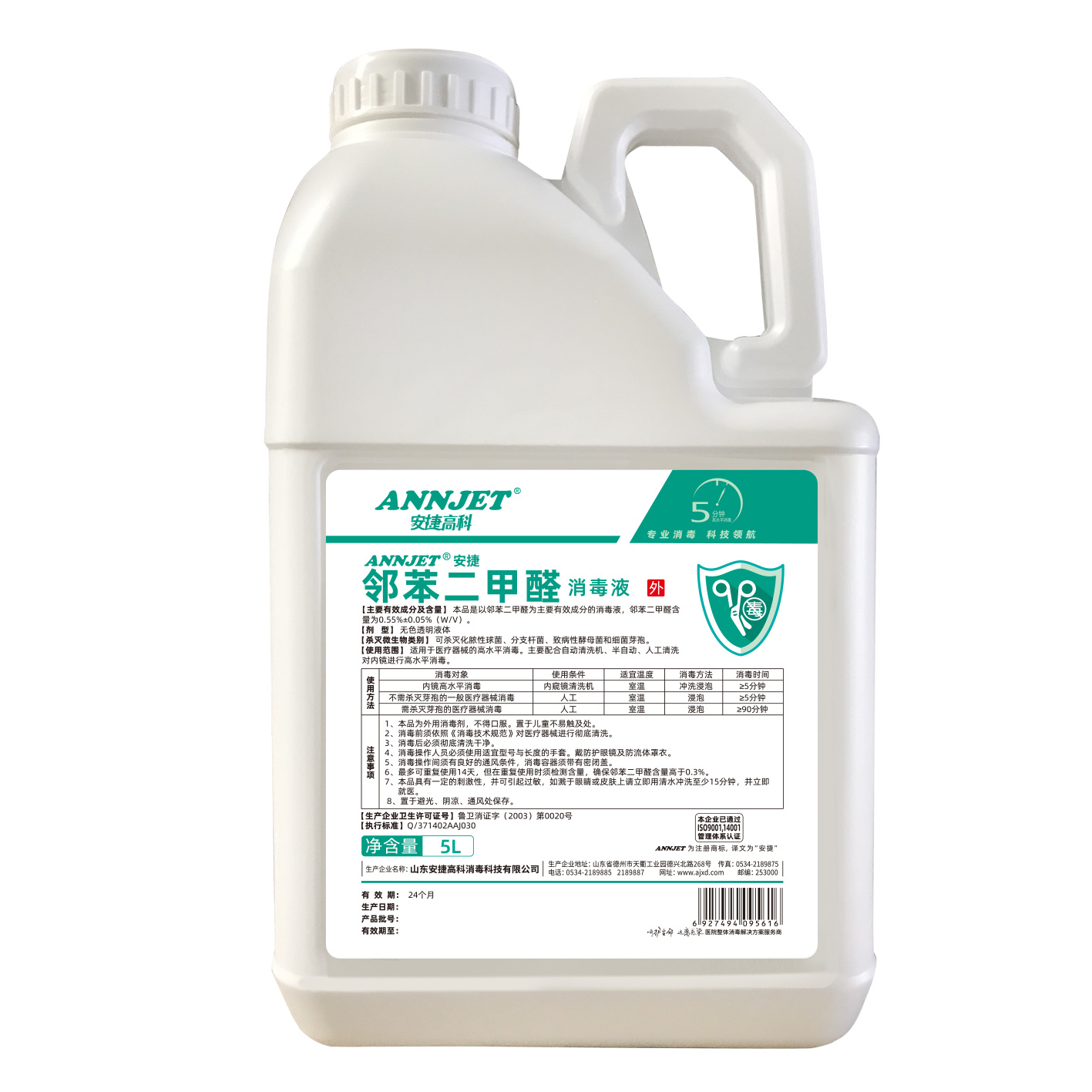
Eugene et al[3 ]Studies have shown, adjacent BenzeneAldehydeA new clinical disinfectant,
It has the advantages of strong sterilization, strong stability, simple preparation and short operation time.In addition, such disinfectants do not cause clinical irritation to the operator, do not need to be activated during use, and do not require relatively special ventilation settings. Therefore, in most countries, phthalates are used in endoscopic disinfection.AldehydeDisinfectant. I...Hospital through clinical studies also confirmed that two benzeneAldehydeDisinfection effect, but should be exceptionally strongThe adjustment is: endoscopic disinfection treatment should be thoroughly cleaned and washed in the early stage, only in this way can the disinfection effect be guaranteed. At the same time, due to the two benzene methylAldehydeDisinfectants and clothingAfter contact with the skin, it is easy to have a gray reaction, which increases the difficulty of cleaning. Therefore, it is necessary to strengthen the protection of the skin during the use of disinfectants to minimize the spraying of disinfectants. At present, most of the domestic hospitals are relying on the traditional twoAldehydeDisinfectant inThe disinfection of endoscopic equipment is safe and reliable, but the disinfection time is long, so that patients can not wait for a long time.AldehydePhthaleneAldehydeDisinfectant completelySex replacement is just around the corner. The results of this study show that clinical through two benzeneAldehydeDisinfectionAgent, pentanediolAldehydeAfter disinfection of endoscope with disinfectant, all obtained100. 0% The clinical pass rate, It shows that the clinical disinfection effect of the two disinfectants is significant;AldehydeDisinfectant Clinical
Work effectiveness and pentai2AldehydeCompared, The difference is statistically significant (P <0. 05 ).
number of colonies ( cfu/ pieces)

 Group Number of cases No pathogenic bacteria growth

 <20
<20
A Group 40 40 40
 B Group 40 40 40
Qualified rate (%)
100. 0 (40/40)
100. 0 (40/40)
To sum up, the clinical use of phthalic two methylAldehydeDisinfecting endoscopes has a significant effect, can shorten the disinfection time, reduce toxicity, and is worth using.
[References]
[ 1JZhou Xiaoliang, Li WenA comparative study of the disinfection of digestive endoscopes with phthalic and pentanediol.
2.2 Evaluation of clinical work efficiency and disinfection time index
Agroup endoscopic disinfection time was5 min,Bgroup endoscopic disinfection time was 10 min,The difference in clinical disinfection time between the two groups was statistically significant.(P <0. 05 ) ;three two groups of endoscopesThe difference in work efficiency indicators such as appointment time and total disinfection was statistically significant.(P<
0. 05). See Table2.
Investigate[ J] Chinese Journal of Microecology , 2013 , 25 (4): 454 -456
[2]Lin Jiang, High girl, Haili Xu, WaitPhthalene dimethyl drunk, pentanediol drunk, chlorine-containing disinfectantComparison of mirror disinfection effect and durability[J]Journal of Nurse Retraining, 2013 ,28 (15) : 1414-1415.
[ 3]Eugene, Liang Zulan, Ye Wanhua, WaitThe effect of phthalic acid on the disinfection of endoscopes.
Observation [J] modern clinical nursingLi, 2012, 11 (1) : 31 - 32
Previous Page
Next Page
RELATED INFORMATION

Caring for life, staying away from infections, providing you with more academic programs

Caring for life, staying away from infections, providing you with more academic programs
ANNJET
Company address: 1618 Dexing North Avenue, Tianqu Industrial Park, Tianqu Sub-district Office, Decheng District, Dezhou City, Shandong Province


WebChat