


Observation on the cleaning effect of multi-enzyme cleaning liquid on the "blind area" of gastroscope cleaning
Release time:
2022-02-21
Multi-enzyme cleaning solution for gastroscope cleaningObservation on the cleaning effect of "blind area"
Li Tingting, SunLi, Guo Baozhu, Zhao Wenjuan
(The 94th Hospital of PLA, Nanchang Jiangxi 330002, China)
AbstractObjective To explore the cleaning method of gastroscope cleaning "blind area", and to ensure the effect of endoscopic cleaning and disinfection. Methods 60 cases of contaminated electronic gastroscope after diagnosis and treatment were divided into control group and observation group according to random number method. Control group: The contaminated endoscopes were cleaned and disinfected according to the 2004 edition of "Technical Operation Specification for Cleaning and Disinfection of Endoscopes. Observation group: on the basis of enzyme washing, gauze dipped in diluted multi-enzyme lotion (1: 150) was used to repeatedly scrub the cleaning "blind area" of gastroscope (operation part, clamp opening, apex part, suction and air supply and water supply opening). The two groups were sampled in the "blind area" after the end of the second wash, and the bacterial culture count and ATP bioluminescence method were used to detect the disinfection effect. Results The bacterial culture count and ATP bioluminescence reading values of the observation group were significantly lower than those of the control group (P <0.05). Conclusion The use of multi-enzyme cleaning liquid to repeatedly wipe the "blind area" of gastroscope cleaning can significantly improve the quality of endoscopic cleaning and disinfection, and ensure the effect of endoscopic cleaning and disinfection.
KeywordsMulti-enzyme cleaning solution; Gastroscope; Blind area; Classification number of cleaning map: R187
Document identification code: B
Article Number: 1001 -7658( 2016) 11 -1130 -02 DOI: 10. 11726/j. issn. 1001 -7658. 2016. 11. 036
With the continuous development of endoscopic diagnosis and treatment technology, digestive endoscopy, as an invasive and minimally invasive diagnosis and treatment device, has been widely used in clinical practice. In recent years, the disinfection and sterilization of endoscopes have received extensive attention. Due to the characteristics of high precision, complex structure and special material, endoscopy is difficult to clean and disinfect, which has become one of the potential important factors for hospital infection.〔1) 〕. At the same time, due to the high price of endoscopes, the number of general hospitals to purchase is limited, and the demand for diagnosis and treatment is large, resulting in cleaning and disinfection work is not in place.〔1,2 〕. Digestive endoscopy at the operating part, forceps opening, apex, suction and air and water supply openings, etc."Blind area" has many small concave and convex, small gap, and after clinical diagnosis and treatment of endoscopic microbial load degree is high, blood, body fluids and other dry organic matter easy to adhere to the small gap〔3) 〕If the long-term cleaning is not thorough, bacteria may adhere to and form microbial colonies at their gaps or uneven surfaces, so that extracellular polymer matrix is wrapped to form biofilm, and disinfectants and sterilizers are prevented from contacting microbial cells, resulting in failure of chemical and physical disinfection and sterilization methods.〔3 and 4 〕. In order to effectively reduce the surface contamination of endoscopes and reduce the incidence of nosocomial infection, this study aimedThe "blind area" was scrubbed with multi-enzyme cleaning agent, and a good cleaning and disinfection effect was achieved.
1 Materials and methods
1. 1Materials
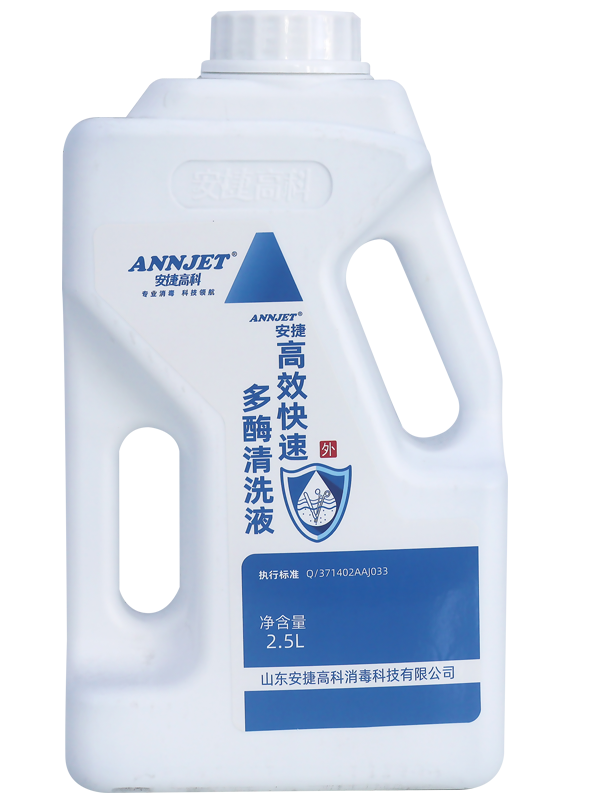
electronic gastroscope(PENTAX EG -2940), rapid multi-enzyme cleaning solution, ATP fluorescence analyzer, sterile cotton swabs, sterile scissors and endoscopic cleaning
|
[Fund Project] Jiangxi Provincial Health Planning Commission Project( 20141317) |

Wash disinfection system.
1. 2Method
1. 2. 1 Experimental grouping 60 cases of electronic gastroscopy contaminated after diagnosis and treatment were divided into control group and observation group according to random number method.
1. 2. 2 cleaning and disinfection method control group: the contaminated endoscope was cleaned according to the requirements of the 2004 edition of the technical operation specification for endoscopic cleaning and disinfection〔5) 〕, the process includes: A bedside pretreatment → B initial washing → C enzyme washing → D washing; Observation group: A - B has the same operation as the control group, and c enzyme washing: the dried endoscope is placed in an enzyme washing tank, and the suction and water supply pipes are connected to carry out internal and external circulation soaking of multi-enzyme washing liquid for 5 min, at the same time, the concave and convex parts such as the cleaning "blind area" of the gastroscope are repeatedly scrubbed with gauze dipped in diluted multi-enzyme lotion (1: 150). The D washes were the same as the control group.
1. 2. 3 Detection Methods Both groups took samples in the cleaning "blind areas" (operating part, tong crossing, apex part, suction port and water supply port) after the secondary washing, and 2 samples were taken from each part. Specimens were subjected to bacterial culture count and ATP bioluminescence assay to detect bacterial residues and microbial contamination.〔6 and 7 〕.① Bacterial counting method: after smearing the sterile cotton swab in the "blind area" of gastroscope cleaning respectively, cut off the contact part, put it into a 10 ml buffer tube containing neutralizer, and detect it within 2 h. ② Adenosine triphosphate (ATP) bioluminescence method: wipe the ATP swab sampling rod back and forth in the "blind area" of gastroscope cleaning for 2 times, then rotate the swab, insert the swab into the detection tube, pinch the ball tube with thumb and middle finger, break it from the suction valve, squeeze the ball tube twice, squeeze the liquid out of the ball tube, put the detection tube into the ATP fluorescence detector, detect and
|
||||||||||||||||||||||||||||||||||||||||||||||||||||||||||||||||||||||||||||||||||||||||||||||||||||||||||||||||||||||||||||||||||||||||

3 Discussion
Multi-enzyme cleaning fluid is a kind of cleaning agent containing proteolytic enzymes and other enzymes, which can effectively decompose the biological pollutants adhered to the endoscope, so that the protein particles are separated into suspended particles and easily washed by flowing water."Blind area" can make the operation part of gastroscope, forceps mouth, apex, suction and water delivery and air delivery and other gaps clean more thoroughly. The results showed that the number of bacterial colonies in the "blind area" of gastroscope cleaning in the observation group was significantly lower than that in the control group.
The detection of organic pollution is also an important indicator to evaluate the quality of endoscopic cleaning and disinfection.ATP bioluminescence assay is through the biological fluorescence reaction detection of pollutants in organisms, through ATP and luciferin and luciferase reaction, in the detection of microorganisms at the same time, can also detect a variety of organic pollution〔6,8 〕.ATP bioluminescence detection method has the characteristics of fast, simple and accurate, and is being popularized and applied in the detection and evaluation of medical device cleaning effect.〔8 〕. The results of this experiment showed that, on the basis of enzyme washing, the use of multi-enzyme cleaning liquid gauze for gastroscope cleaningThe ATP fluorescence reading of the observation group was significantly lower than that of the control group, which improved the quality of cleaning, reduced the biological load on the surface of the endoscope, and ensured the effect of endoscopic cleaning and disinfection.
In short, on the basis of conventional enzyme washing, multi-enzyme lotion is used to scrub the gastroscope operation part, clamp mouth, apex part, suction and air supply mouth, etc."Blind area", achieved a cleaner disinfection effect, worthy of further discussion and application.
References
〔Ma Jiuhong, Hu Xuefei, Liu Linlin, et al. Monitoring and evaluation of gastroscope and colonoscopy pre-cleaning
[J. Chinese Journal of Hospital Infection, 2012,22( 20) : 4566-4567.
〔Shen Yuan, Wang Hesheng, Sun Yanping. Investigation on the management of endoscopic cleaning in Wuxi hospitals [J]. Chinese Journal of Hospital Infection, 2006,16( 1) : 53-55.
〔3 Song Yan, Yao Heying, Xu Junlu. Analysis of Quality Control of Soft Endoscope Cleaning and Disinfection
[J]. Journal of Nurse Training, 2015,30( 9) : 789-792.
〔4. Zhang Huaying, Du Heying, Du Jingfeng, et al. Cause analysis and countermeasures affecting the quality of endoscopic cleaning [J]. Medical Information, 2010,24( 9) : 2573.
〔5 Cleaning and Disinfection Group of Digestive Endoscopy Branch of Chinese Medical Association. Expert Consensus on Cleaning and Disinfection of Digestive Endoscopy in China [J]. Chinese Journal of Digestive Endoscopy, 2014,31( 11):
617-622.
〔6. Bowman, Lin Zhengyan, Xia Zhihua. Monitoring and improvement of clinical endoscopic cleaning
[J]. Chinese Journal of Modern Nursing, 2014,20( 14) : 1739-1741.
〔7. Zou Lijuan, Chang Houchan, Dai Hongxia, et al. Application of ATP Fluorescence Method to Monitor the Effect Analysis of Each Link of Endoscopic Instrument Cleaning [J]. Journal of Nurses Training, 2012,27( 14) : 1258-
1260.
〔8〕 Hansen D,Benner D,Hilgenhoner M,et al. ATP measurement as method to monitoring the quality of reprocessing flexible endoscopes[J]. Ger Med Sci,2004,2( 4) : 1-5.
(Editor of this article: He Junmei Date of receipt: 2016 -02 -13)
Previous Page
Previous Page
Next Page
RELATED INFORMATION

Caring for life, staying away from infections, providing you with more academic programs

Caring for life, staying away from infections, providing you with more academic programs
ANNJET
Company address: 1618 Dexing North Avenue, Tianqu Industrial Park, Tianqu Sub-district Office, Decheng District, Dezhou City, Shandong Province


WebChat